
Topic 1: EQUITY: FESTIVE FEAST
October 2026 witnessed a recovery in Indian equity markets, with the benchmark indices Sensex and Nifty reversing their two-month losing streak and ending the month in positive territory. Based on the opening levels of October 1 and closing levels of October 30, the BSE Sensex gained 3.14%, while the NSE Nifty 50 advanced 2.26%. The Sensex opened at 72,192.89 and closed at 74,459.53, registering an absolute gain of 2,266.64 points. Similarly, the Nifty opened at 22,543.70 and ended the month at 23,053.10, gaining 509.40 points.
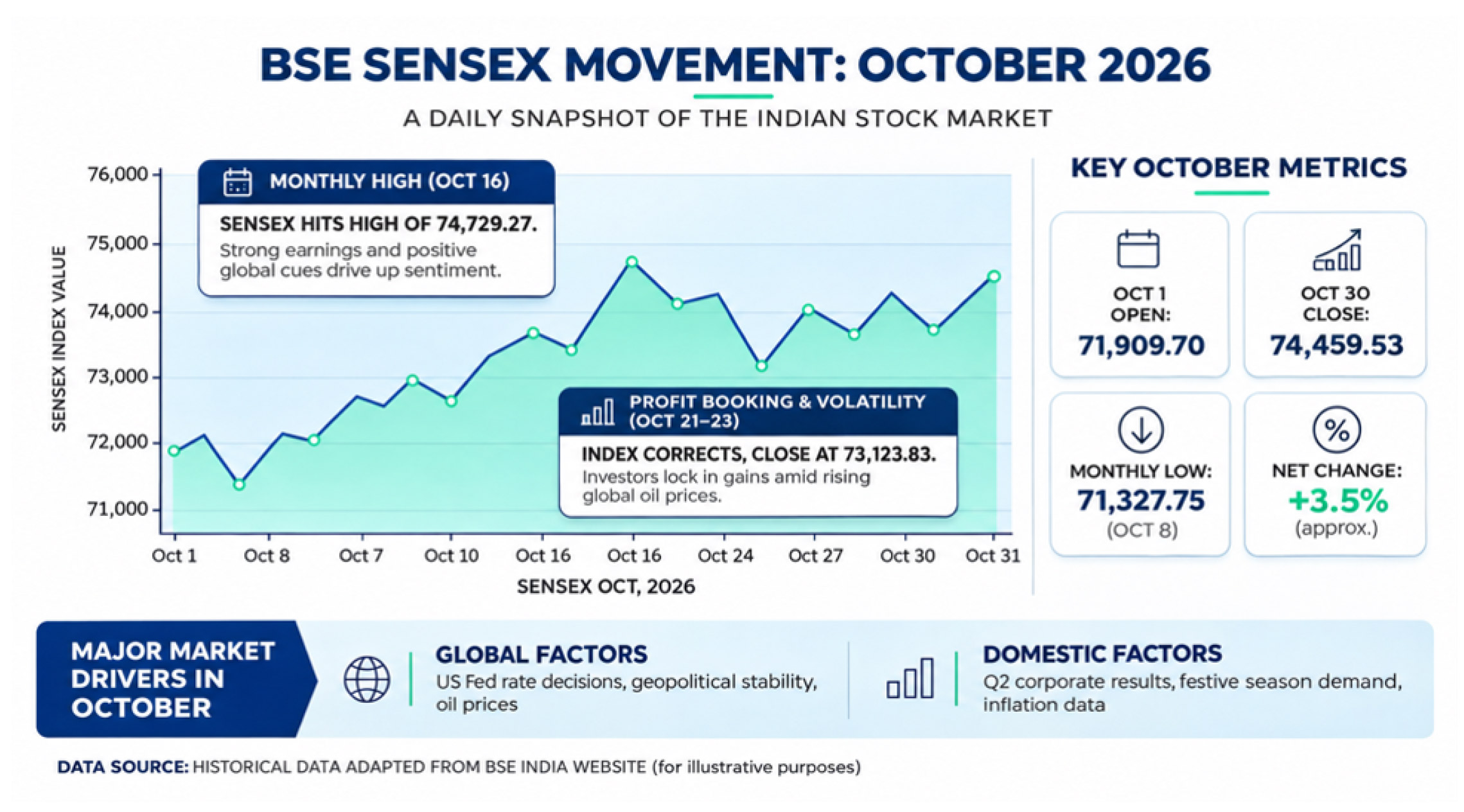
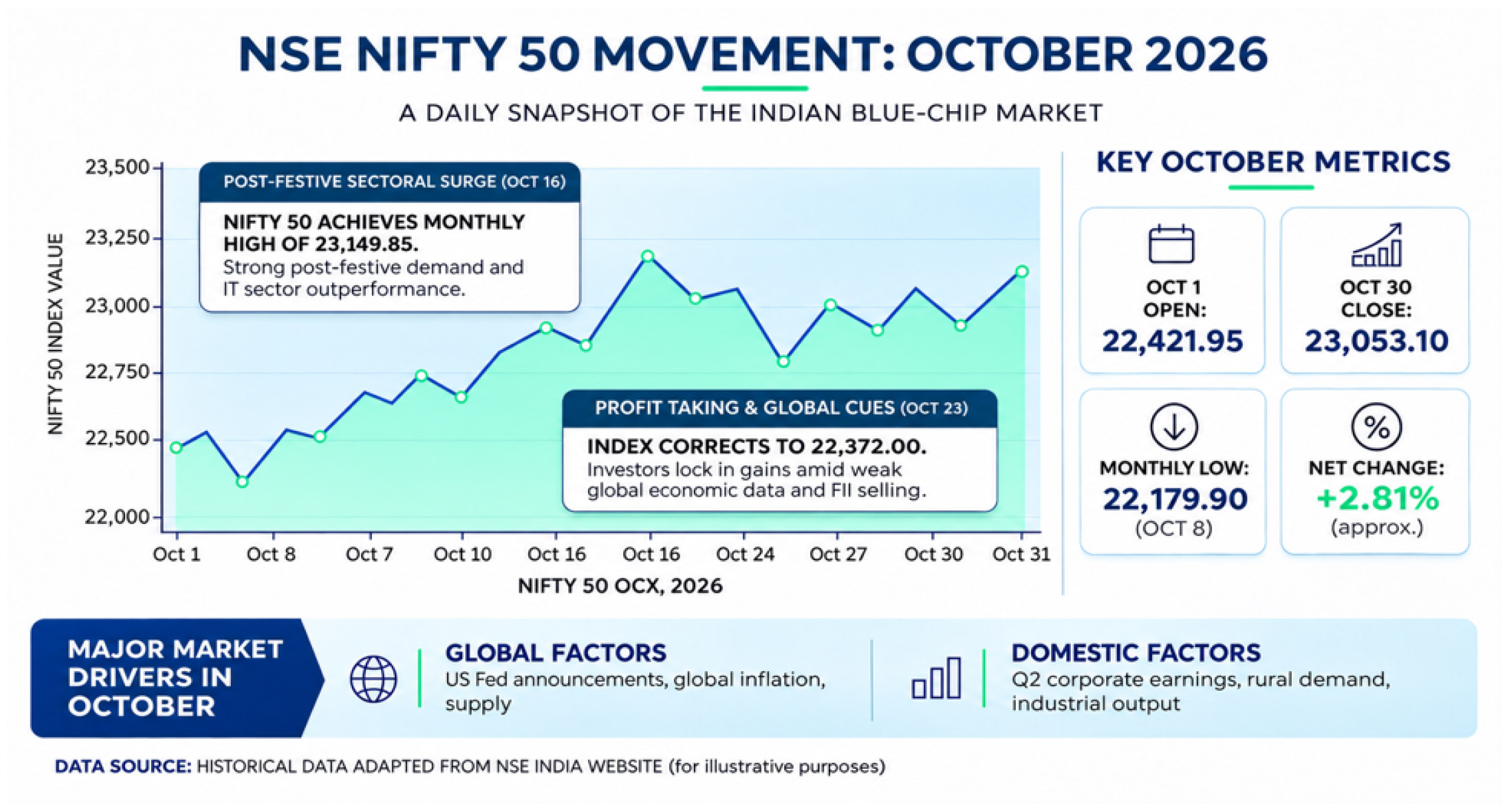
The market's performance during October was characterised by considerable volatility, with an initial phase of weakness followed by a strong recovery towards the final trading sessions. Investor sentiment remained influenced by global geopolitical developments, crude oil prices, monetary policy decisions, foreign investment flows and corporate earnings. Internationally, escalating tensions in the Middle East and concerns over disruptions to crude oil supplies kept Brent crude prices elevated, increasing worries about India's import expenditure, inflation and external balances. Higher US Treasury yields and a relatively strong US dollar also reduced the attractiveness of emerging-market equities, encouraging foreign investors to reassess their exposure to Indian markets. Weakness in global technology stocks and uncertainty surrounding international economic growth added to the cautious sentiment during the first half of the month. Foreign institutional investors (FIIs), also referred to as foreign portfolio investors (FPIs), were among the most significant factors influencing market direction during October. According to provisional exchange data, foreign institutions were net sellers of approximately ₹45,162 crore in the cash market, while domestic institutional investors (DIIs) recorded net purchases of approximately ₹62,220 crore. The scale of foreign selling was particularly significant as it marked the largest monthly FII net outflow in the available monthly comparison since June 2026. FIIs were net sellers in 14 out of 20 trading sessions, with their selling activity concentrated in the first half of the month. On October 8 alone, foreign institutions recorded net sales of approximately ₹12,944 crore, intensifying the pressure on benchmark indices. Several factors contributed to the sustained foreign investor withdrawals. Firstly, higher US Treasury yields and a stronger dollar made American financial assets relatively more attractive compared with emerging-market investments. With US 10-year government bond yields offering competitive returns, foreign investors found it more attractive to allocate capital to relatively safer US assets rather than remain exposed to the volatility of emerging markets. Secondly, elevated crude oil prices and geopolitical uncertainty increased concerns about India's macroeconomic outlook. Higher oil prices raised the risk of inflation, currency depreciation and a widening current account deficit, reducing the attractiveness of Indian equities. Thirdly, relatively expensive Indian market valuations encouraged foreign investors to explore opportunities in other Asian markets, particularly China, Hong Kong and South Korea, where valuations appeared more attractive. The artificial intelligence-led rally in North Asian technology stocks also diverted a portion of global investment flows away from India. Additionally, concerns over corporate earnings growth and the sustainability of market valuations following earlier rallies encouraged foreign investors to book profits and reduce their exposure to Indian equities.
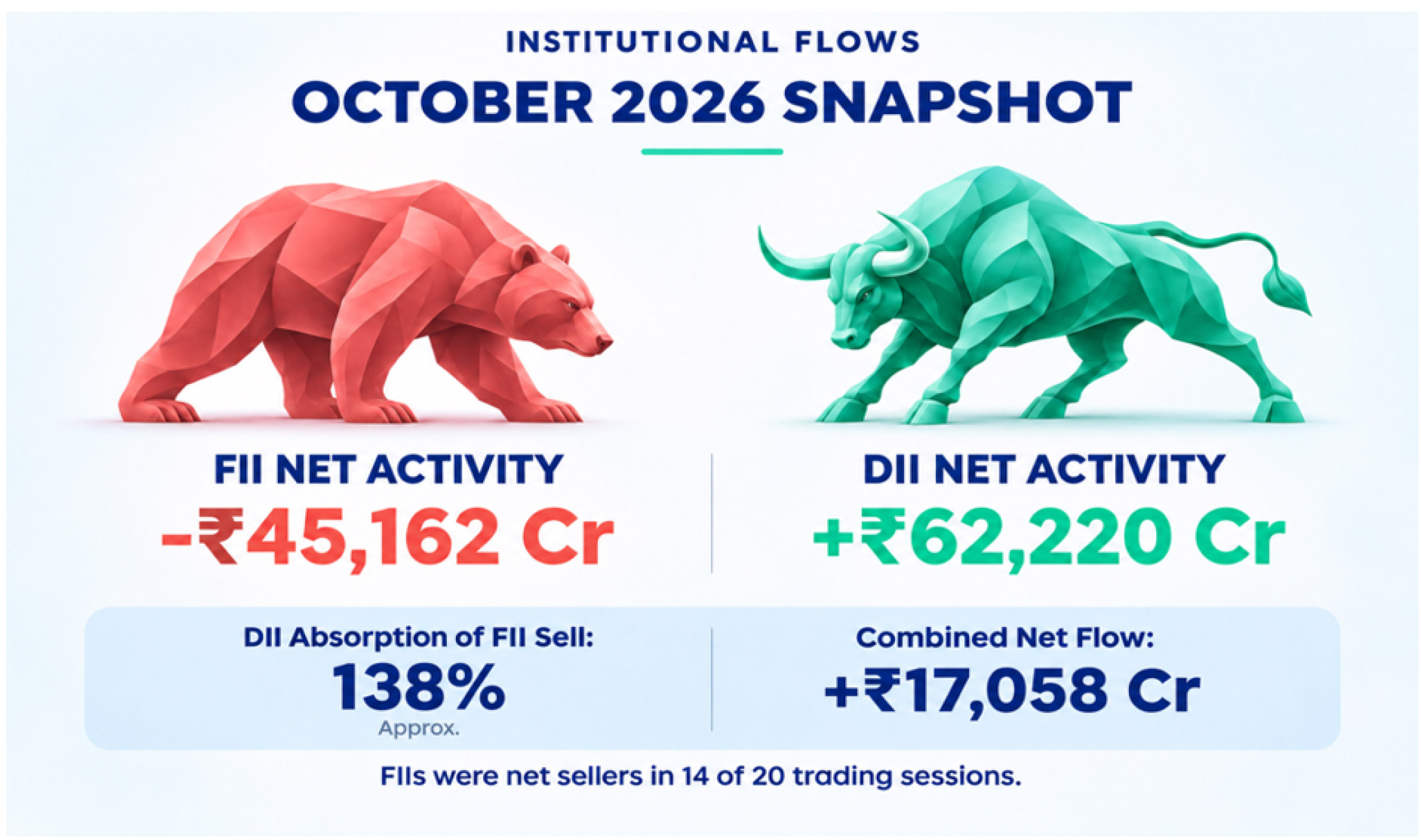
The impact of FII selling was, however, partly absorbed by strong domestic institutional participation. DIIs, including mutual funds, insurance companies and other domestic financial institutions, remained consistent buyers, recording net purchases of ₹62,220 crore in the exchange cash-market data. Their buying was supported by continued domestic investment flows and helped provide liquidity during periods of foreign selling. Interestingly, foreign investor sentiment improved towards the end of October, with FPIs returning as net buyers and infusing approximately ₹6,300 crore during the final week, October 26–30. This reversal, along with improving corporate earnings and domestic buying, contributed to the recovery in benchmark indices. It is worth noting that depository-based FPI flow figures and exchange-based FII cash-market figures differ because they cover different transaction categories and settlement periods. Depository data separately reported net equity outflows of approximately ₹34,843 crore for October. On the domestic front, the Reserve Bank of India's monetary policy decision also influenced investor sentiment. The Monetary Policy Committee raised the repo rate by 25 basis points to 5.50% on October 7, shifting towards a calibrated tightening stance amid inflationary concerns. The rate hike initially weighed on interest-rate-sensitive sectors, particularly banking and other businesses dependent on borrowing costs, as investors assessed its implications for credit growth, consumption and corporate profitability. Nevertheless, the market witnessed a notable turnaround during the latter half of the month, supported by relatively resilient September-quarter corporate earnings and improving investor confidence. The information technology sector emerged as the strongest performer, with the Nifty IT index gaining approximately 17.69%, supported by encouraging quarterly results, growing interest in artificial intelligence-led business opportunities and attractive valuations following earlier corrections. Positive earnings announcements from selected companies also encouraged selective investment in large-cap stocks. Furthermore, expectations of a possible reduction in the long-term capital gains tax rate from 12.5% provided an additional boost to sentiment, although no such policy change had been officially announced. Despite the recovery in benchmark indices, broader market performance remained subdued. The Nifty Midcap 100 and Smallcap 100 declined by